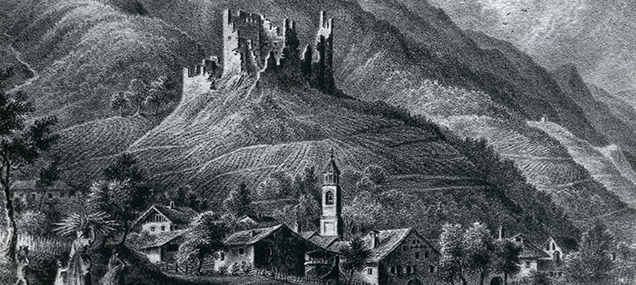


At the beginning of the 1520s, the Bishop Prince, Bernardo Clesio, decided to transform the castle, which was at that point in ruins after a century of peace and negligence, into a luxury home. In order to complete it, he made the community contribute to the expense with free labour and construction material.
In May of 1525, the people of Levico, embittered, forced the bishop’s representatives out and laid siege to the small garrison which was present in the renovated castle.
At that time, a large part of the Imperial territories from southern Germany to the Alps were already involved in a farmers’ uprising which was called Bauemkrieg or the Great Peasant War. On the 31st of August 1525, the farmers in revolt, including many from Levico, tried to storm the city of Trento but were brutally defeated and subsequently endured a fierce repression.
The names of the leaders from Levico who were defined as perfidissimi (extra evil) and condemned to death or banned for sedition are still found in Trento’s ecclesiastical records.
The modernization of the castle was able to start again without any opposition, transforming it into a vacation home and giving it a structure that can still be noticed today.